
Stickman Ragdoll Fighter: Bash
CASUAL AZUR GAMESAction
4.72.42K Reviews
- Version
- 0.2.56
- Installs
- 50.00M
- Age Rating
- Teen
Screenshots
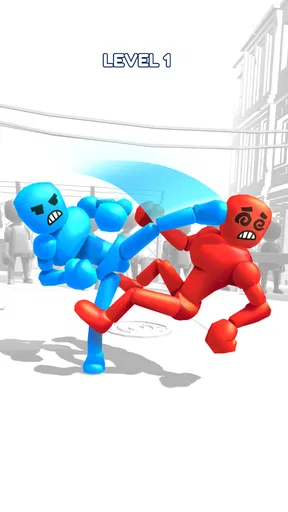

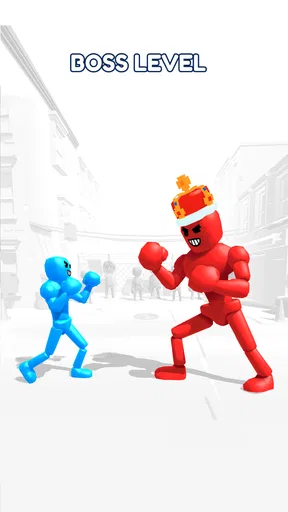
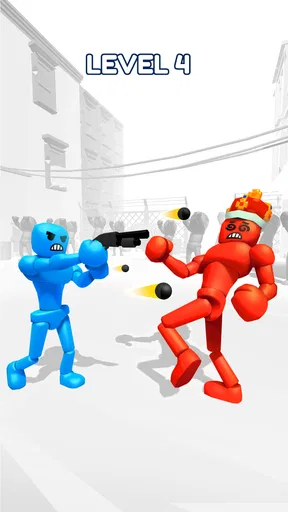
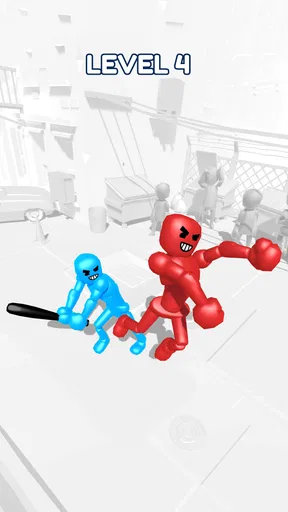
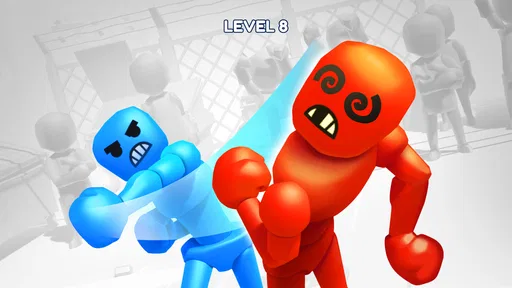
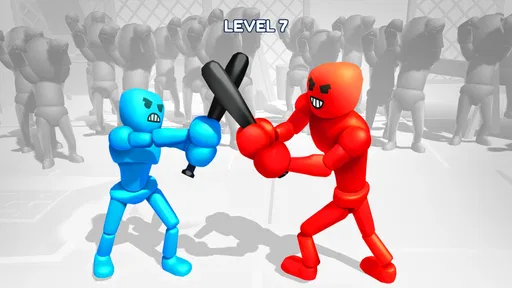
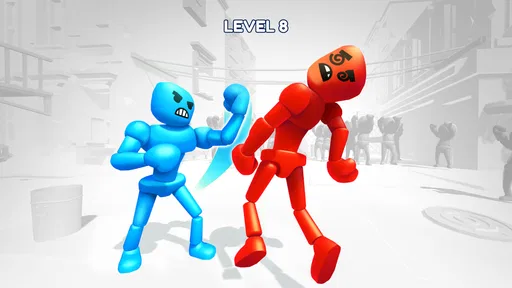
Our Review of Stickman Ragdoll Fighter: Bash
 Analysis by Appyee
Stickman Ragdoll Fighter: Bash makes a very clear first impression: this is a compact action game built around the pleasure of hitting, kicking, and watching simple stick figures react dramatically. I spent time with it expecting a lightweight distraction, and that is exactly where it works best. It does not try to present itself as a deep fighting simulator. Instead, it turns exaggerated impacts and ragdoll movement into the main attraction, keeping the mood playful even when the action becomes hectic.
The game comes from CASUAL AZUR GAMES and sits in the action category. It is free to start, with optional in-app purchases ranging from $0.99 to $11.99 per item. Its Teen content rating is worth keeping in mind, not because the presentation is realistic, but because the focus is still on repeated combat. The current version is 0.2.56, and it can run on Android devices using version 7.0 or later.
What I like most is how quickly the game communicates its purpose. You do not need to learn a complicated fictional universe or memorize a long list of fighters before enjoying the first encounter. The visual language, the physical reactions, and the short bursts of action all point in the same direction. This is a game about readable impact and immediate amusement, not elaborate storytelling.
Why the first few fights are so easy to understand
The opening experience is deliberately approachable. Stick figures remove visual clutter, so the important information is easy to read: where the opponent is, which direction the attack is going, and what happens after contact. That simplicity helps the game feel responsive even when the action is chaotic. I could concentrate on timing and positioning instead of trying to identify detailed armor, weapons, or environmental objects.
The ragdoll style also gives every successful hit a little extra personality. A normal attack animation would show a fixed reaction and move on. Here, the opponent’s body can become part of the entertainment, making a well-timed strike feel more satisfying than its basic input might suggest. The effect is intentionally exaggerated, but it gives ordinary encounters a small visual payoff.
That design makes the game particularly suitable for short sessions. I can imagine opening it while waiting for an appointment, playing a few fights during a commute, or using it as a quick break between more demanding games. It does not ask me to settle into a large campaign before the fun begins. The trade-off is that players who want a substantial narrative or a carefully structured competitive ladder may find the experience too light.
The store presents it as a free game, and that matters for the way I approach it. I can try the core action without making an immediate purchase decision. At the same time, the presence of optional purchases means I would check the payment prompts carefully, especially if the game is being played on a shared device. The free entry point is convenient, but it does not automatically mean every part of the experience is equally free of interruptions or spending pressure.
A visual world built from motion rather than detail
The stickman art direction is more than a shortcut. It gives the game a consistent visual identity and supports the ragdoll idea naturally. Because the characters are visually spare, the body movement becomes the main expressive tool. A fighter leaning into a blow or tumbling after a heavy impact can communicate more than a detailed facial expression would in this particular setting.
I also found that the plain silhouettes help maintain focus during fast exchanges. In many action games, visual effects can make it difficult to see what caused a hit. Here, the limited character design leaves more room for the movement itself. That does not make every moment perfectly clear, but it keeps the screen from feeling overloaded by decorative detail.
The setting feels intentionally broad and game-like rather than grounded in a believable place. That choice fits the tone. Since the fighters are presented as animated figures rather than realistic people, the game can lean into physical comedy without creating an uncomfortable contrast between serious violence and cartoon presentation. The result is a playful arena mood, even when the basic loop remains focused on defeating opponents.
There is a useful practical advantage to this style: the game’s personality is recognizable at a glance. A player can understand that this is a stickman fighting game before reading much text. That clarity is valuable on a phone screen, where a crowded interface or complicated art style can make a quick action title feel harder to approach.
Still, the same visual restraint may disappoint players who choose action games for rich environments, detailed character customization, or cinematic presentation. If your ideal fighter has dramatic stages, elaborate costumes, and a strong story campaign, this is probably not the right match. The sparse art is effective because it stays focused, but it also places a ceiling on the sense of discovery.
How sound and pacing support the playful mood
The game’s mood depends heavily on rhythm. Attacks, reactions, and recoveries need to feel like a sequence rather than a collection of disconnected animations. When the pacing works, a fight develops a simple beat: approach, strike, watch the reaction, then decide whether to press forward or regain control. That rhythm is what keeps a basic encounter entertaining.
I do not approach the sound design here as if I were reviewing a large musical production. Its job is more functional and immediate. Impact cues should make contact feel noticeable, while the surrounding audio helps prevent the action from becoming visually silent. In a game built around bash-heavy encounters, even a small sound response can make the difference between an attack that feels effective and one that feels like a button press with no consequence.
The strongest atmosphere comes from the relationship between sound and ragdoll movement. A hit becomes funnier when the audio punctuates the body’s exaggerated reaction. That combination keeps the tone energetic rather than grim. The game does not need a complicated setting to create a mood because the timing of each collision supplies much of the character.
Pacing is also important for mobile play. A short, direct encounter is easier to enjoy when I have only a few minutes. The game’s appeal is strongest when it lets me get into the action quickly and does not make every session feel like a long commitment. On the other hand, players who prefer slow tactical planning may find the constant emphasis on immediate contact a little repetitive.
One useful way to play is to treat the sound and movement as feedback instead of decoration. I pay attention to the moment an attack connects, then use the opponent’s reaction to judge whether continuing pressure is sensible. This is more reliable than tapping rapidly without watching the screen. The game’s simple presentation rewards observation, even though it looks like a purely chaotic brawler at first.
Where the mechanics fit the presentation
The central mechanical fit is strong: simple stick figures make physical reactions easy to notice, and ragdoll behavior gives basic attacks a sense of consequence. The game does not need a complex combat vocabulary to make a hit enjoyable. The pleasure comes from choosing a moment, connecting cleanly, and seeing the opponent lose balance in an exaggerated way.
That does not mean the action is mindless. Even in a straightforward fight, I get better results when I avoid treating every opening as an invitation to attack. Rushing can leave me poorly positioned, while waiting briefly can make the next strike more satisfying and easier to read. My most useful practical tip is to watch the opponent’s body rather than focusing only on the attack button. The animation often tells me whether the exchange is still under control.
A second tip is to think of the edge of the fighting space as a resource. When an opponent is already moving awkwardly, pushing the action in the same direction can produce a more dramatic result than changing direction repeatedly. This is not a complicated combo system; it is simply a way of using the game’s physical presentation intelligently. The ragdoll style becomes more rewarding when I work with momentum instead of fighting against it.
A third useful approach is to separate experimentation from winning. During a first attempt, I may try different attack timings just to understand how the fighters react. That can make a loss feel informative rather than frustrating. Once I know how quickly an opponent recovers or how much space an attack needs, I can play more deliberately. This is especially helpful for new players who assume that fast tapping is always the best answer.
The game’s simplicity is also its main limitation. Players who enjoy precise frame-based combat, large move lists, character-specific strategies, or long-term mastery may eventually want a more technical fighting game. A traditional fighting title is usually better for studying combos and matchups. A physics sandbox may be better for unrestricted experimentation. Stickman Ragdoll Fighter: Bash occupies a middle ground: it offers physical comedy and direct action, but not the depth of a dedicated competitive fighter.
That middle ground is valuable for the right audience. I would recommend it to someone who wants an action game that can be understood quickly and enjoyed without a long tutorial. I would be more cautious recommending it to a player who needs a strong progression structure or expects every fight to feel strategically different. The game’s variety comes mainly from how the action unfolds, so repetition can become noticeable for players who spend long sessions with it.
Everyday use, device expectations, and spending choices
In an everyday scenario, I would use this as a reset button after a busy task. I can open it when I want something more active than a puzzle but less demanding than a full console-style adventure. The immediate stickman presentation means I do not have to remember a complicated plot or rebuild a strategy from a previous session. That makes it suitable for irregular play, where several days may pass between sessions.
The broad Android compatibility is another practical advantage. Since the minimum requirement is Android 7.0, the game is not restricted to only the newest phones. Even so, the actual comfort of play will depend on the device’s screen size, touch response, and general performance. On a smaller display, fast movement may feel less comfortable, while a larger screen can make the action easier to follow. I would also keep the phone charged if I planned a longer session, as with any action game that keeps the screen active.
The rating of 4.7 from roughly 48 thousand ratings and more than two thousand reviews suggests that the game has connected with a large audience. It has also passed 50 million installs, which helps explain why it feels designed for immediate recognition rather than a niche group of fighting-game specialists. Those figures are useful context, but they do not replace personal preference: a popular casual brawler can still be the wrong choice for someone seeking a deep tournament experience.
Because the game is free, I would start without buying anything and first decide whether the basic combat remains enjoyable after several sessions. Optional purchases priced from $0.99 to $11.99 per item can make sense only if they improve a part of the experience I already value. My advice is simple: do not spend to solve boredom. If the core loop does not hold your attention on its own, a purchase is unlikely to change the game’s fundamental style.
Parents should also consider the Teen rating before handing it to a younger player. The presentation is cartoon-like and built around stick figures, but the game is still centered on fighting. That distinction matters more than the absence of realistic graphics. For older players, the tone is light; for families, the rating is the better guide than the playful art alone.
Who will enjoy it, and who should choose something else
I see the best audience as people who enjoy short action sessions, physics-based reactions, and simple controls. It is a good fit if you like watching an attack produce a funny or dramatic physical response, and if you prefer learning through play rather than reading long instructions. It can also work for players who want a casual alternative to more serious fighting games.
I would skip it if your main reason for downloading an action game is story. The setting and characters serve the fights rather than developing a large narrative world. I would also look elsewhere if you want a carefully balanced online competition, a deep roster, or a progression system that remains the main reason to return. In those cases, a conventional fighting game or a more substantial action title will probably offer better long-term value.
It is also not ideal for someone who dislikes unpredictable physics. Ragdoll reactions are the point, but they can make outcomes feel less controlled than in a traditional fighter. If you prefer every movement to follow a precise animation and every mistake to have a clearly measurable cause, the loose physical behavior may feel frustrating instead of entertaining.
For everyone else, the game’s charm comes from its honesty. It does not need to pretend that a simple punch is part of an epic saga. It turns the punch into a small event, gives the reaction room to be amusing, and moves quickly toward the next exchange. That focus is why the art, sound, and pacing feel coherent even when the mechanics remain uncomplicated.
My atmosphere verdict after spending time with it
After playing Stickman Ragdoll Fighter: Bash, I came away with the impression of a focused casual action game that understands its own scale. CASUAL AZUR GAMES uses stickman visuals, exaggerated physical reactions, and brisk encounters to create a playful mood without burying the mechanics under extra decoration. The setting is not the star, and the sound does not need to dominate; both exist to make each impact easier to feel.
The game works best when I approach it as a short, lively distraction. I watch the opponent, choose my moment, use the available space, and let the ragdoll response provide the entertainment. That small amount of attention makes the action feel more deliberate than the store summary might suggest. It is still a straightforward brawler, but it rewards better timing and awareness more than random tapping.
Its weaknesses are closely tied to its strengths. The clean presentation is accessible but not richly detailed. The direct combat is easy to enjoy but may become repetitive for players who need deep systems. The loose physics create memorable moments but can frustrate anyone looking for strict control. I would not recommend it as a replacement for a serious fighting game, yet I would recommend it to a friend who wants quick stickman action with a humorous physical edge.
With a 4.7 average and a free starting point, it is an easy game to test for yourself. I would begin with short sessions, avoid spending until the basic loop proves enjoyable, and pay attention to whether the ragdoll unpredictability makes me laugh or irritates me. If it makes you smile when a well-timed hit sends a fighter stumbling in an unexpected way, the game’s simple world has done its job. Its strongest feature is not complexity; it is the consistent mood created when art, impact, sound, and pacing all serve the same playful idea.
Verdict
Strengths of Stickman Ragdoll Fighter: Bash
- Simple controls make it easy to start playing immediately.
- Ragdoll physics create unpredictable and entertaining combat moments.
- Short matches are convenient for quick gaming sessions.
- Unlockable fighters and weapons add variety to the battles.
- Works well as a casual game for players who enjoy physics-based action.
Limitations of Stickman Ragdoll Fighter: Bash
- Gameplay can become repetitive after extended play.
- Random physics sometimes make victories feel less skill-based.
- Some content may require watching ads or making purchases.
- Limited depth may disappoint players seeking a competitive fighter.
- Ads can interrupt the flow between matches.
Other Releases by CASUAL AZUR GAMES
View All
Worms Zone .io - Hungry Snake
Action4.3

Stack Ball - Crash Platforms
Arcade4.5

STAR: Super Tricky Amazing Run
Arcade4.2

State.io — Conquer the World
Strategy4.1
Similar Picks in This Category
View All
Temple Run 2: Endless Escape
Imangi Studios4.1

PUBG MOBILE
Level Infinite4.3

Free Fire: 9th Anniversary
GARENA INTERNATIONAL I4.4

Talking Tom: Hero Dash Run
Outfit7 Limited4.3

slither.io
Lowtech Studios3.9

Sniper 3D:Gun Shooting Games
Wildlife Studios4.6
Frequently Asked Questions
What is Stickman Ragdoll Fighter: Bash?
Stickman Ragdoll Fighter: Bash is a physics-based action game in which you control a flexible stickman and fight opponents through fast, chaotic battles. Instead of relying only on traditional attacks, the game focuses on momentum, ragdoll movement, timing, and environmental interaction. Matches are designed to be quick and entertaining, making it suitable for short play sessions when you want simple controls and humorous combat.
How do you play Stickman Ragdoll Fighter: Bash?
The gameplay is built around controlling your stickman’s movement and attacks while trying to knock opponents out or push them into dangerous areas. You generally need to combine directional input, timing, and positioning rather than repeatedly tapping one attack button. Because the characters react with ragdoll physics, movement can feel unpredictable at first, so learning how to use momentum and recover from awkward landings is an important part of the experience.
Is Stickman Ragdoll Fighter: Bash free to download?
Stickman Ragdoll Fighter: Bash can generally be downloaded and played without an upfront purchase, although availability and pricing may vary depending on your Android or iOS region. As with many free mobile games, you may encounter advertisements, optional purchases, or other monetization features during play. It is worth checking the store listing before installing, especially if you want to know whether ads can be removed or which items require payment.
Can Stickman Ragdoll Fighter: Bash be played offline?
The core fighting experience may be playable without a constant internet connection, which makes the game convenient for quick sessions while traveling or when mobile data is unavailable. However, some features can depend on connectivity, including advertisements, store content, updates, cloud-related services, or online events if they are included in your version. For the most reliable information, test the game after installation with Wi-Fi and mobile data disabled.
Is Stickman Ragdoll Fighter: Bash suitable for children?
The game uses cartoon-style stickman characters and exaggerated ragdoll action rather than realistic violence, which may make it appropriate for many younger players. Nevertheless, parents should review the age rating, advertising, and any in-app purchase options shown on the relevant app store. The fast physics-based controls can also be challenging for very young children, so supervision is recommended if the device is shared or purchases are enabled.
Play our best games!


